How to Read a Room and Adjust Your Setlist Live
Every good band plans a set, and every great band is ready to throw it out. The room you imagined when you built the setlist last Tuesday is not always the room in front of you tonight. Reading that room and adjusting in real time is the skill that separates a band that performs at a crowd from one that plays with it. It is learnable, and a well-built set makes it far easier.

The short version
- The set is a plan, not a contract. Reading the room is what turns a good band into a great one.
- Watch the floor, not the front row, and trust what people's feet tell you over what they say.
- Adjusting live is low-risk when your set is built so songs can be swapped without breaking pacing.
What you are actually reading
Reading a room is not mystical. It is paying attention to a few honest signals while you play. The dance floor is the clearest one: full and moving, thinning, or never started. Beyond that, watch where energy sits. Are people up the front engaged and the back of the room talking over you? Is the crowd older than you planned for, or younger? Are phones out for the right reasons or because they are bored?
Trust behaviour over politeness. People will clap warmly and then sit down. The feet do not lie. If the floor empties on a particular kind of song two nights running, that is data, not bad luck.
The common reads and what to do
Most rooms send one of a few clear messages once you know what to look for.
- The floor is full and lively: do not get clever. Stay in the pocket that is working and resist the urge to play your weird favourite.
- The floor filled too early: you peaked too soon. Ease back with a groove so you have somewhere to climb again, rather than burning out.
- Nobody is dancing yet: the room is not ready. Pull a more familiar, lower-risk floor-filler forward and give them an easy yes.
- The crowd is older or younger than planned: shift toward the era that is landing. Have alternates from other decades ready to reach for.
- Energy is sagging mid-set: jump to a known banger early rather than waiting for the one you had planned three songs later.
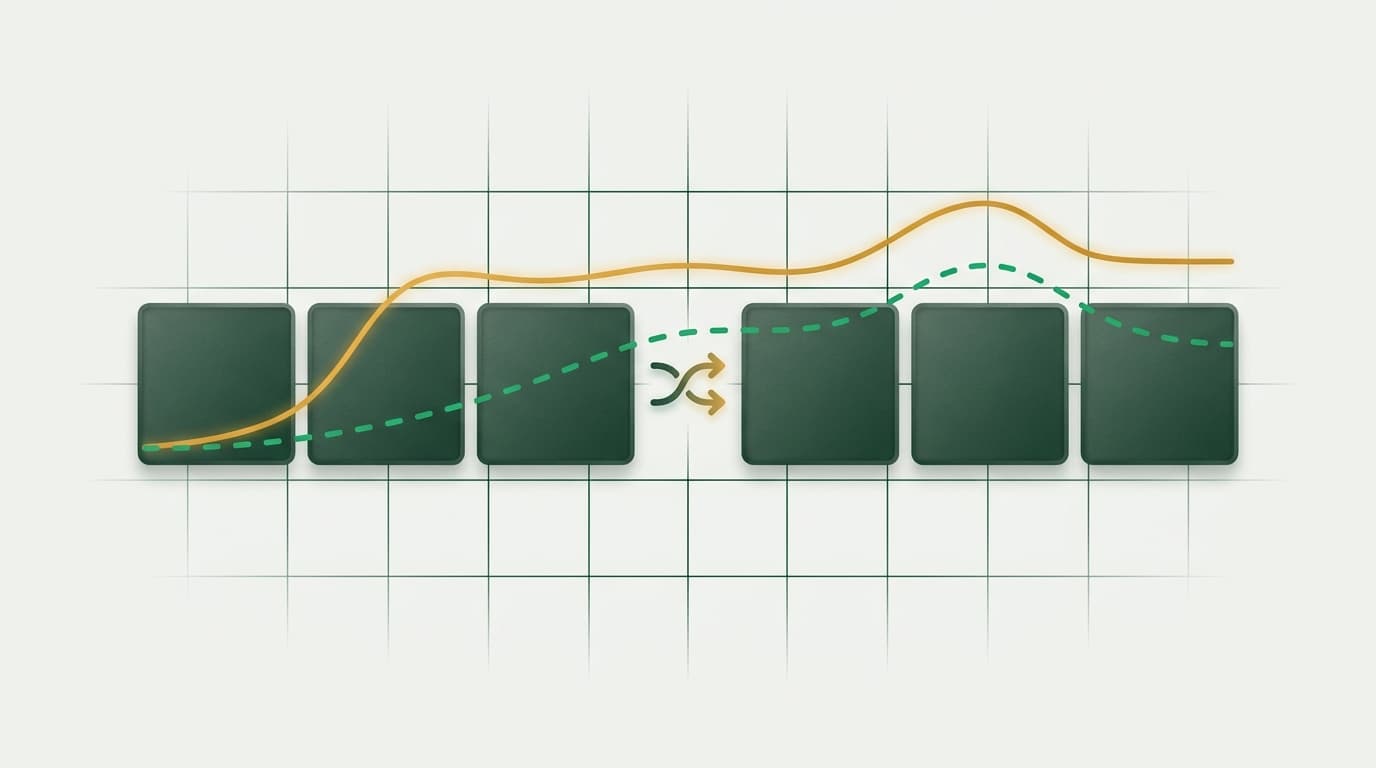
Build a set that is easy to change
The reason bands freeze and play the set as written is fear: change one song and the pacing falls apart, the singer hits two hard numbers in a row by accident, or nobody knows what is next. You remove that fear by building a set you understand well enough to bend safely.
- Know your alternates. For each set, have a couple of songs in mind you can drop in, and know their energy and vocal cost.
- Keep a mental escape hatch: the one banger that reliably rescues a flat room.
- Avoid sets so tightly stacked that a single swap creates a vocal pile-up. Leave a little slack.
- Make sure the band can follow a change. A clear call and a setlist everyone can see beats a panicked shout.
Why pacing data helps you improvise
It sounds backwards, but knowing the energy and vocal-intensity rating of every song makes spontaneity safer. When you pull a song forward on instinct, you instantly know whether it lands your singer on a third demanding number in a row, or whether it spikes the energy too early. The data does not replace the instinct, it tells you the cost of acting on it, so you can change course with your eyes open.
Debrief while it is fresh
The best readers of a room got that way by reviewing. After a gig, note what you changed and how it went: the swap that saved the second set, the song that emptied the floor, the request that turned the night. Feed those notes back into your library and your templates. Reading a room is a skill that compounds, and the bands who track it improve far faster than the ones who rely on memory.
Frequently asked questions
- What does it mean to read the room as a band?
- It means watching honest signals while you play, mainly the dance floor, where the energy sits, and the age and mood of the crowd, then adjusting your song choices to match what is actually in front of you rather than the set you planned in advance.
- How do you change a setlist during a gig?
- Have a few alternates in mind for each set and know their energy and vocal cost, so a swap does not wreck your pacing or your singer. Pull a reliable floor-filler forward when the room sags, ease back if you peaked early, and make a clear call so the band can follow.
- How do you get better at reading a crowd?
- Review every gig while it is fresh. Note what you changed and how it landed, which songs filled or emptied the floor, and what the crowd responded to. Feed those notes back into your repertoire and templates so the lessons carry into the next night.
About the author
The Set List Creator team
Written by the people who build Set List Creator, most of whom play covers, function and wedding gigs around New Zealand. The advice here is the same thinking baked into the app.