Keep a Residency Fresh: Setlist Rotation That Works
A residency is the best and worst thing that can happen to a setlist. Best, because steady money and a home crowd are gold. Worst, because the temptation to play the same proven set every week is enormous, and that is exactly how you bore the regulars who keep the gig alive. The fix is rotation, done with a bit of system rather than guesswork.

The short version
- Regulars notice repetition long before they complain, they just quietly stop turning up.
- You do not need a new set each week, only enough turnover to feel different month to month.
- Rotating by what you played last, not by feel, is what keeps it honest.
Why the same set quietly kills a residency
Nobody walks up after a gig to say the set was identical to last fortnight. They just feel a little less excited, come a little less often, and eventually the room thins out and the venue wonders if the band is still pulling. By then it is hard to win back. Rotation is cheap insurance against a slow decline you will not see coming.
The core-and-rotate model
You do not need to reinvent the night every week, and you should not. Split your repertoire into two parts. The core is the set of bankers you can always rely on to land. The rotation pool is everything else: good songs that do not all need to appear every gig.
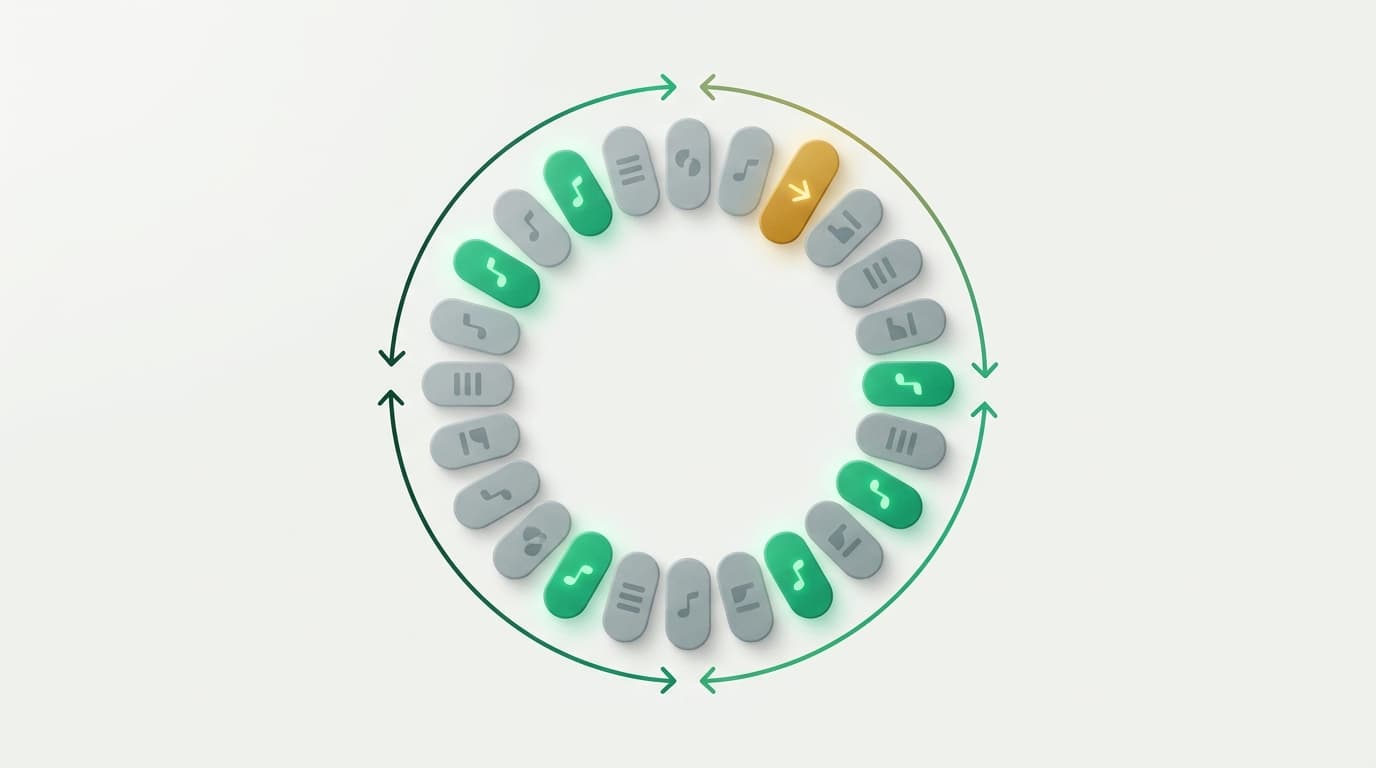
Each gig, keep most of your core but swap a chunk of the rest out of the rotation pool. A useful starting ratio is roughly two-thirds steady, one-third changed. The regulars get the songs they secretly want to hear plus enough new ground that the night feels alive.
Rotate by data, not by memory
The hard part of rotation by hand is honesty. You think you have rested a song when you played it three weeks running, because the weeks blur. Tracking the date you last played each song removes the guesswork. When the information lives next to the song, you can sort your library by least-recently-played and pull your next swaps straight off the top.
Set List Creator records when a song was last in a finalised set and can weight new auto-generated sets toward songs you have not played in a while. That is rotation happening almost for free: build a fresh set, and the rested material naturally rises.
Keep a couple of anchors fixed
Rotation does not mean everything moves. If your closer always brings the house down, keep it. A residency can have a signature song or two that the regulars come to expect, the thing they would miss if it vanished. Rotate around your anchors, not through them.
Use rotation to road-test new songs
A residency is the safest place to break in new material. The stakes are low and the crowd is forgiving. Slot one new song into each gig, watch how it lands, and either promote it into the core or quietly let it go. Over a few months this keeps your repertoire growing in the direction the actual room responds to, not the direction the band guesses at in rehearsal.
Frequently asked questions
- How often should a residency band change its setlist?
- Change roughly a third of the set each gig while keeping your reliable core. That is usually enough that a fortnightly regular hears something different every visit, without forcing the band to relearn a whole new set every week.
- How do you stop a setlist getting stale?
- Track when you last played each song and deliberately rest the ones you have leaned on, bringing forward songs you have not played in a while. Rotating by recorded play dates rather than by memory keeps the turnover honest, since the weeks tend to blur together.
- Should you keep any songs in every set?
- Yes. Keep a small number of signature anchors, like a closer that always works, that the regulars come to expect. Rotate the rest of the set around those fixed points rather than changing absolutely everything every night.
About the author
The Set List Creator team
Written by the people who build Set List Creator, most of whom play covers, function and wedding gigs around New Zealand. The advice here is the same thinking baked into the app.