Building a Cover Band Repertoire That Books Gigs
Plenty of bands have eighty songs and still get caught out at a gig. The problem is rarely the size of the list. It is the shape of it: too many songs from one era, three different versions of the same energy, and nothing that suits the wedding you just got offered. A repertoire is a tool, and like any tool it should be built for the job.
The short version
- Build your list around the gigs you want to book, not the songs you like rehearsing.
- Spread your repertoire across eras, tempos and vocal demands so any night is coverable.
- A tagged, rated library turns a pile of songs into something you can actually plan from.
Start from the gig, not the song
The most common way to build a repertoire is also the worst: everyone brings songs they enjoy playing, you learn the ones you agree on, and the list grows by accident. A few years in you have a set that suits a Friday rock pub and nothing else, and you turn down the corporate function because you cannot fill three hours of dinner-and-dancing.
Work backwards instead. List the kinds of gig you want: pub residencies, weddings, corporate functions, festivals, private parties. Each one needs a different mix. Weddings need broad, multi-generational, singalong-heavy material with a dinner-volume section. Pubs want energy and recognisability. Once you know the gigs, the gaps in your list become obvious.
Cover the spread, not just the hits
A repertoire that books gigs has range across a few axes at once. You are not just collecting popular songs, you are making sure that whatever the night asks for, you have an answer.
- Eras: something for the older crowd, something for the younger one, and the decade-spanning anthems everyone knows.
- Tempo: enough genuine floor-fillers, enough mid-tempo groove, and a handful of slow numbers for dinner sets and first dances.
- Vocal demand: a mix of easy and demanding songs so you can pace a long night without cooking your singer.
- Feel: rock, soul, pop, country, funk, whatever your band does well, so you can shift the room's mood when you need to.
Rate every song so you can plan from it
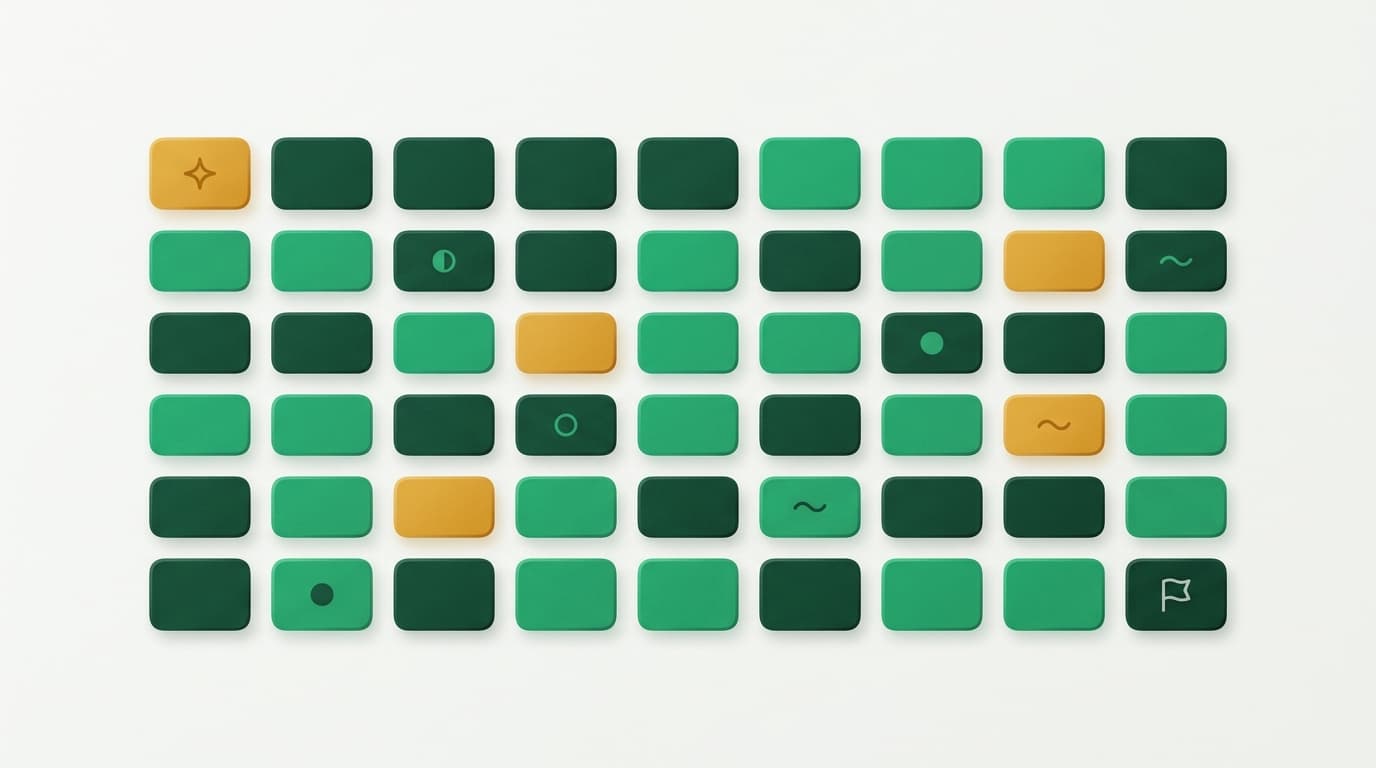
A list of titles tells you nothing useful when you are building a set under time pressure. What helps is knowing, for each song, how much energy it brings and how hard it is to sing. Set List Creator asks for both as a one-to-five rating, plus the song's key and length, because those four numbers are what let a setlist be built sensibly rather than by gut feel alone.
Add tags on top of the ratings: opener, closer, ballad, party, singalong, whatever language your band uses. Tags are how you tell the difference between two up-tempo songs where one always opens well and the other always closes. They are also what an auto-builder uses to put the right song in the right slot.
Track what the song needs, not just the song
Keep the chart, the key you actually play it in, and any arrangement notes attached to the song itself. The version you do is rarely the record. When a dep sits in or you bring back a song you have rested for six months, the notes are the difference between a confident performance and a train wreck in the second verse.
Grow it on purpose
Once you can see your repertoire as a shape, growing it gets strategic. Instead of learning the next song someone fancies, you learn the song that fills a gap: the late-night closer you are missing, the dinner-set ballad, the one current hit that will get phones out at a wedding. A dozen well-chosen additions a year, aimed at real gaps, beats fifty random ones.
The repertoire audit
Once or twice a year, look at the whole list against the gigs you want and ask three questions: what can we not currently cover, what have we leaned on so hard it is stale, and what have we never actually played live. Retire the dead weight, learn into the gaps, and your repertoire stays a working tool instead of a museum.
Frequently asked questions
- How many songs does a cover band need?
- Enough to cover your longest gig with room to spare and to vary the set week to week. For a band doing three 45-minute sets, roughly 50 to 70 well-chosen songs is a comfortable working repertoire. Beyond that, breadth across eras and tempos matters more than raw count.
- How do you organise a band's song list?
- Give every song a few pieces of structured data: an energy rating, a vocal-demand rating, its key, its length, and tags for its role like opener, closer or ballad. That turns a flat list of titles into something you can filter, pace and build sets from quickly.
- Should a cover band learn current hits or classics?
- Both, deliberately. Classics carry the room across generations and are safe at almost any gig. A few current hits keep you feeling fresh and get younger crowds and phones engaged. Aim for a backbone of proven songs with a steady trickle of new material aimed at real gaps.
About the author
The Set List Creator team
Written by the people who build Set List Creator, most of whom play covers, function and wedding gigs around New Zealand. The advice here is the same thinking baked into the app.